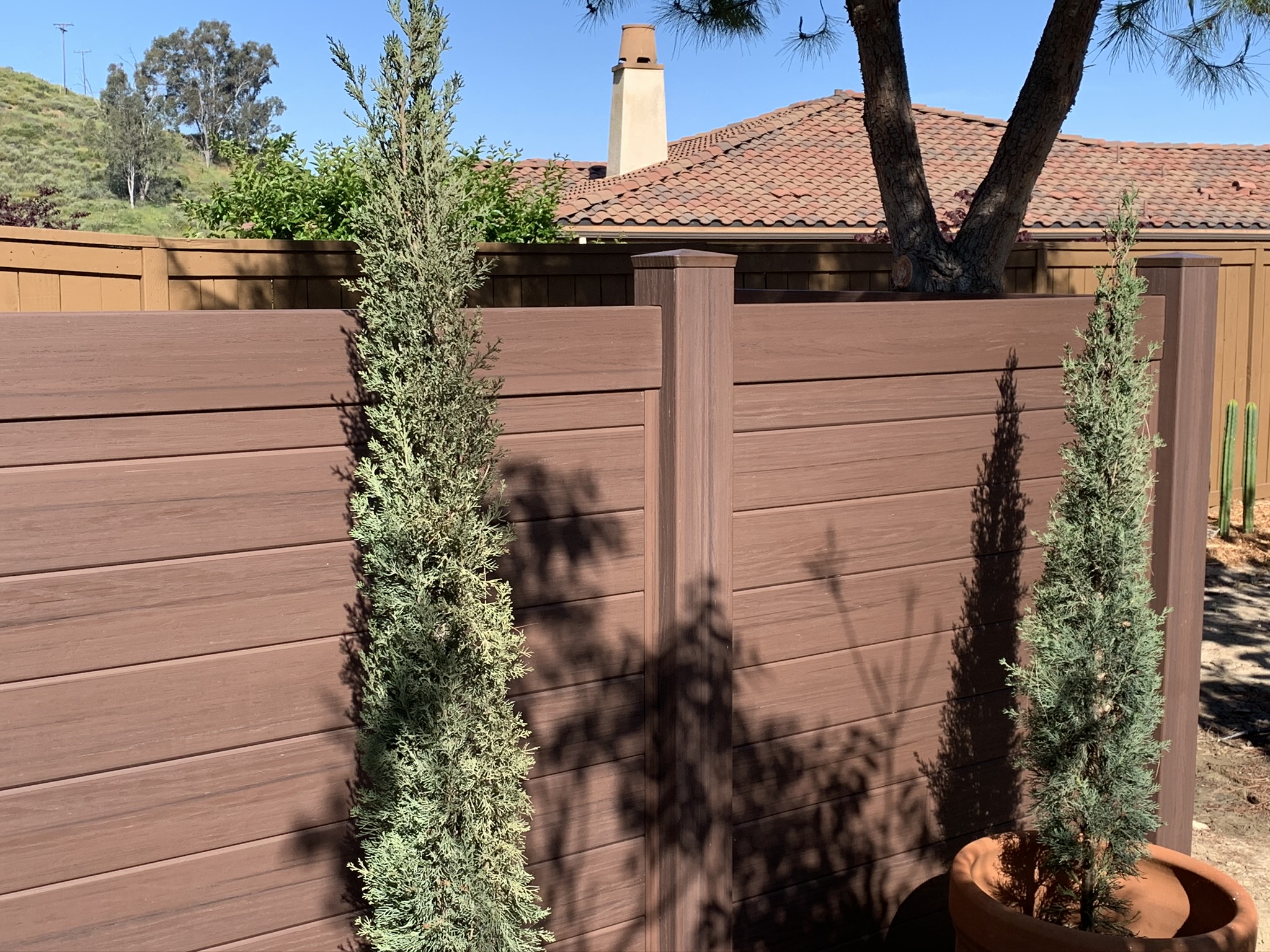
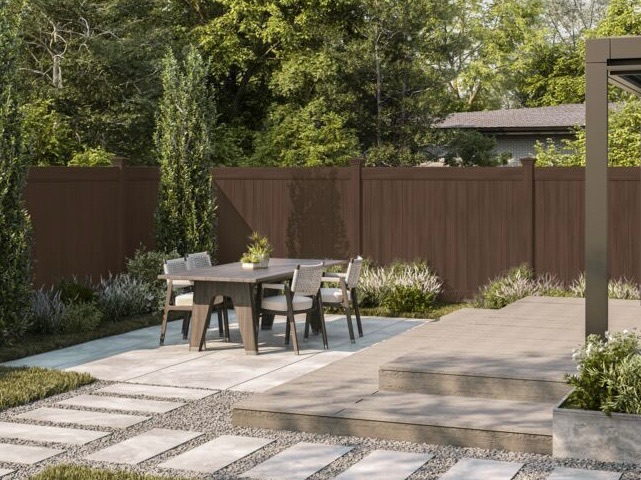
Privacy is one of the most common reasons homeowners install or upgrade fencing. In San Diego, where homes are often built close together and outdoor spaces are used year-round, backyard privacy can significantly impact how a space is used and enjoyed.
Not all fences provide the same level of privacy. Material, height, spacing, and layout all influence how much visibility a fence blocks. Some options offer complete visual screening, while others provide partial privacy to allow airflow and light.
Understanding different privacy fencing options can help homeowners choose a solution that aligns with their space, maintenance preferences, and long-term goals.
What Makes a Fence “Private”?
A privacy fence is designed to limit visibility into a yard or outdoor space, but the level of privacy depends on several key factors.
Height
Fence height plays a major role in determining how much privacy a fence provides. Taller fences are more effective at blocking sightlines from neighboring properties or nearby streets.
Most residential privacy fences are built at heights that provide coverage while still complying with local guidelines or HOA requirements.
Panel Design and Gaps
The way a fence is constructed has a direct impact on visibility.
- Solid panel designs block most or all visibility
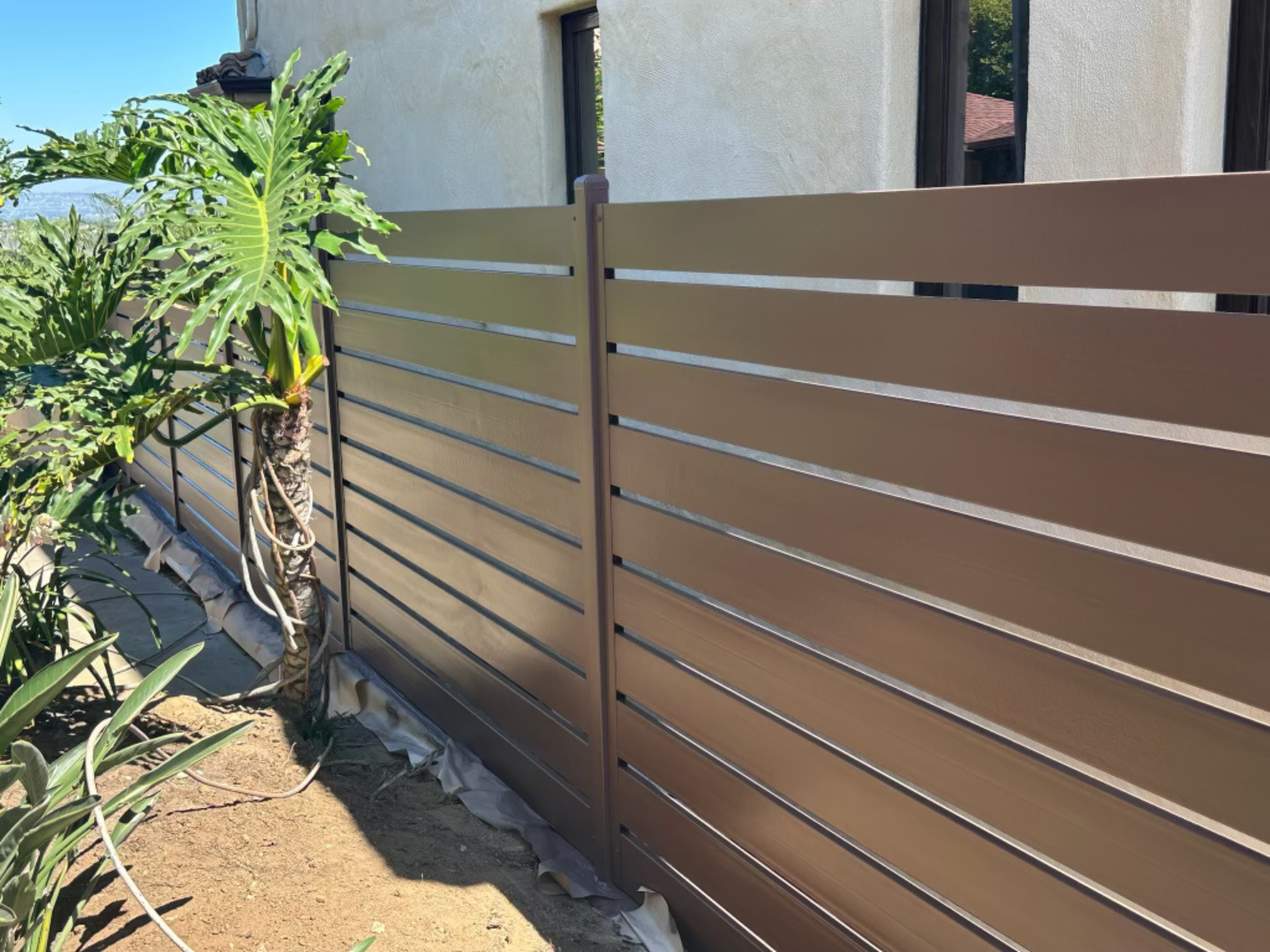
- Semi-private designs include small gaps that allow light and airflow
- Open designs provide minimal visual screening
Even small gaps between boards or panels can reduce overall privacy.
Material
Different materials naturally offer different levels of privacy. Some materials are designed for full coverage, while others are better suited for boundary definition.
Material choice often determines whether a fence provides complete privacy or a more open feel.
Layout and Placement
Fence placement also affects how much privacy it provides. The same fence may offer different levels of screening depending on:
- Yard size
- Elevation changes
- Proximity to neighboring homes
- Angles of visibility
Because of this, privacy fencing is often evaluated based on both the fence itself and how it fits within the property layout.
Most Common Privacy Fence Options
Several fencing materials are commonly used to create privacy in San Diego backyards. Each option differs in how much visibility it blocks, how it performs over time, and how much maintenance it requires.
Wood Privacy Fencing
Wood fencing is one of the most traditional options for backyard privacy. It is typically built with solid vertical boards that create full visual separation between properties.
What to expect:
- High privacy with little to no visibility through panels
- Customizable design, including height and board style
- Can be installed with tight spacing or board-on-board construction for added coverage
Because wood is a natural material, it does require ongoing maintenance to preserve its appearance and durability over time.
Vinyl Privacy Fencing
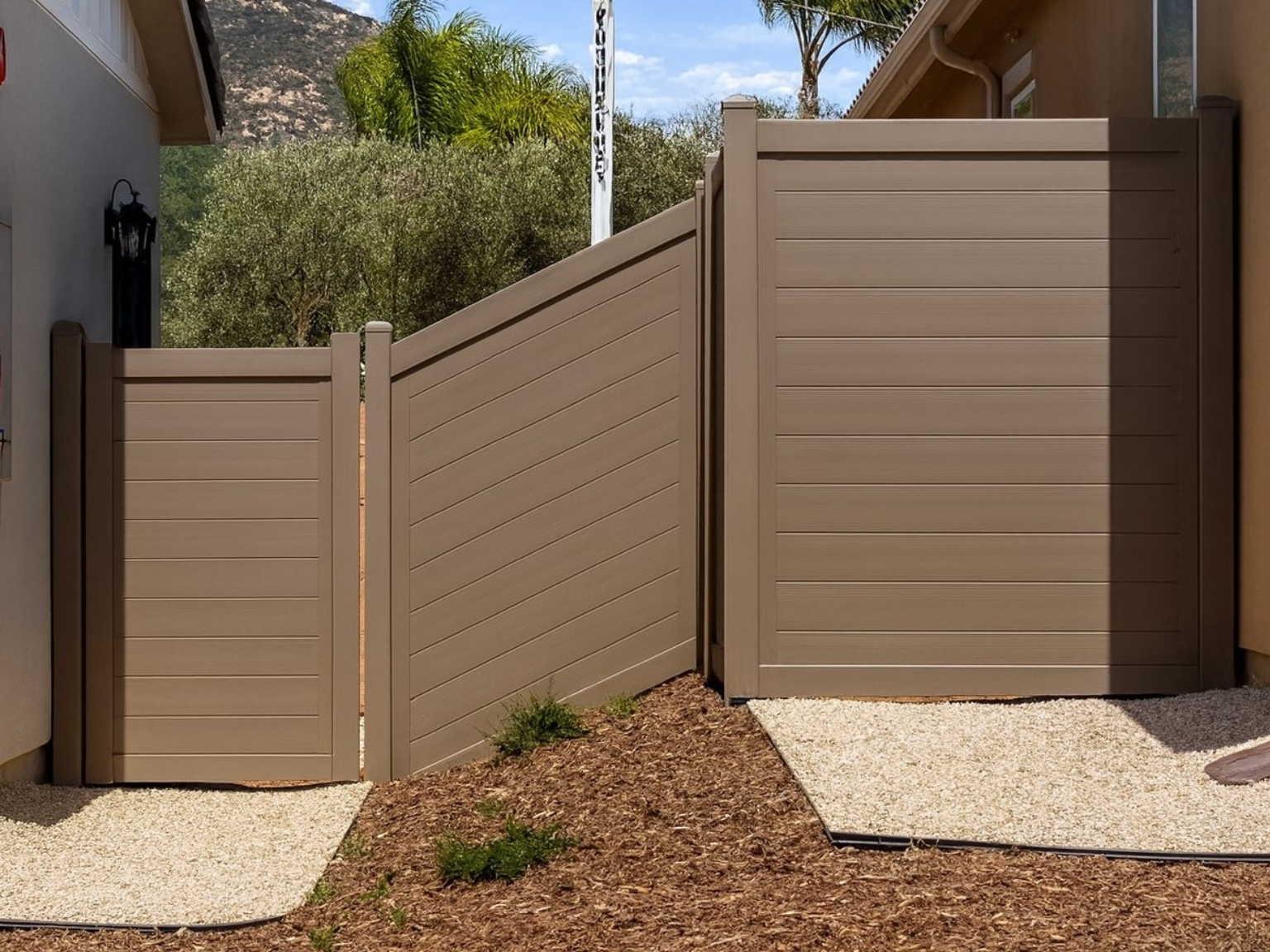
Vinyl fencing is commonly used for privacy because it is manufactured in solid panel sections designed to block visibility while maintaining a consistent appearance.
What to expect:
- Full privacy panels with no gaps between boards
- Low maintenance, with no need for staining or sealing
- Uniform appearance that remains consistent over time
Vinyl fencing is often chosen by homeowners who want a privacy fence with minimal ongoing upkeep.
Iron Fencing
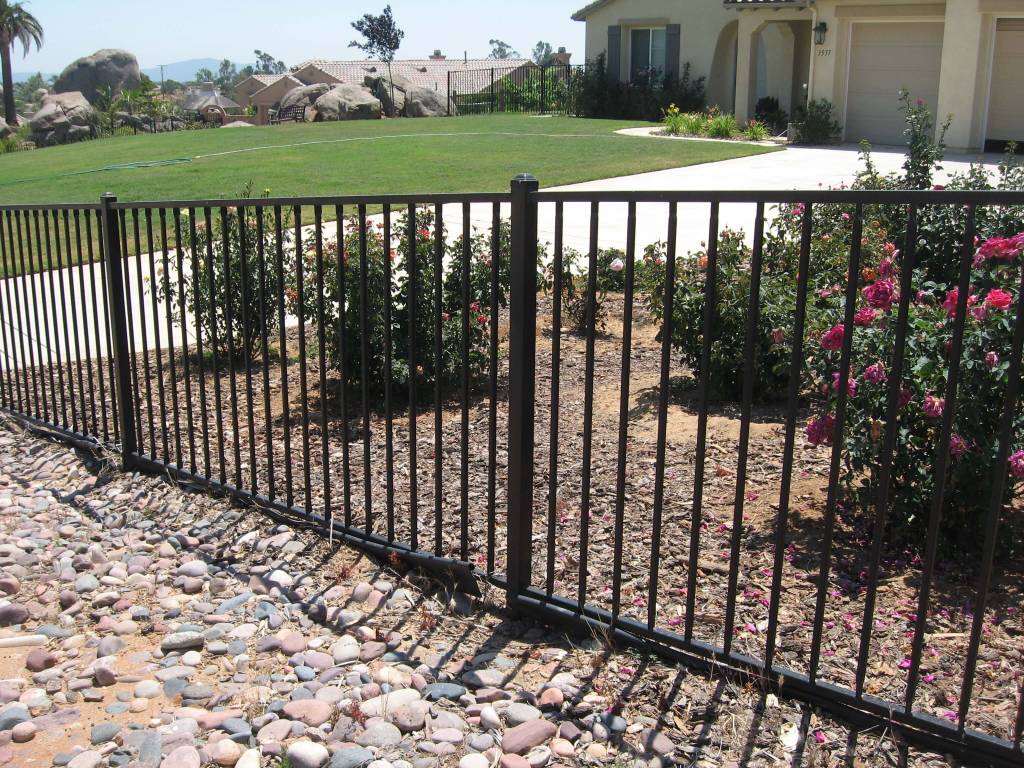
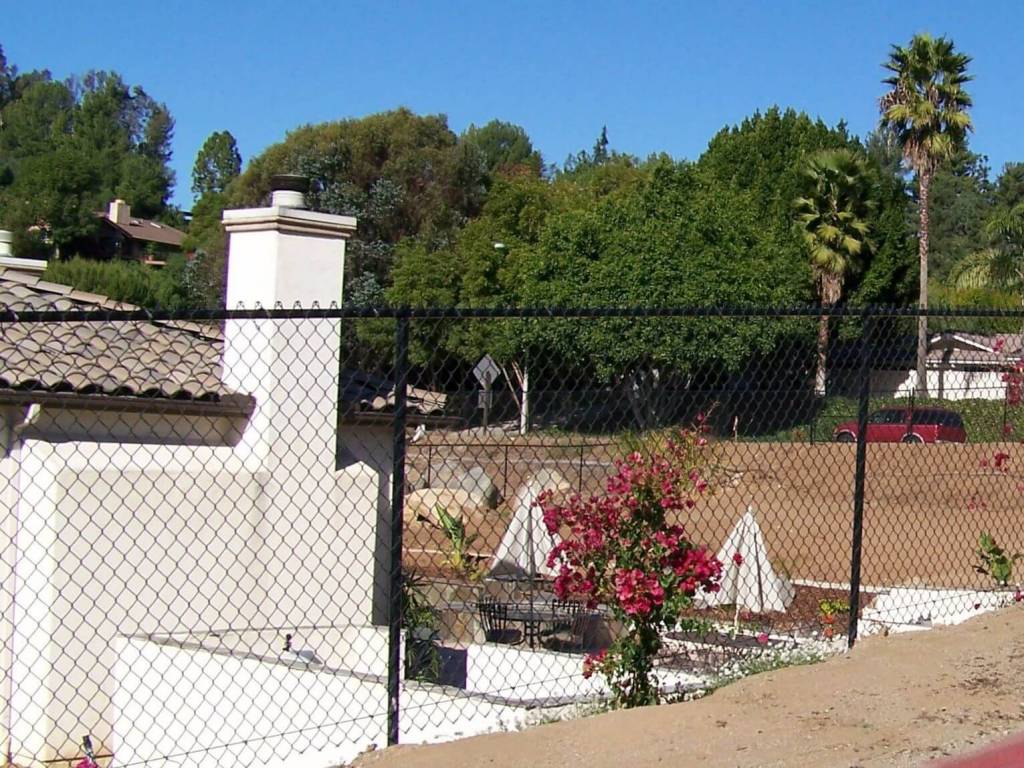
Metal fencing, including ornamental iron and chain link, is typically not used for full privacy because it allows visibility through the structure.
What to expect:
- Low to minimal privacy due to open design
- Often used for security or boundary definition rather than screening
- Can be paired with landscaping or inserts to increase privacy
While metal fencing may be suitable for certain applications, it is generally not used when full visual privacy is the primary goal.
Choosing Based on Privacy Needs
When comparing materials, the key difference is how much visibility each option blocks. Wood and vinyl are typically used for full privacy, and metal fencing is better suited for partial privacy or decorative purposes.
Understanding how each material performs helps homeowners choose a fencing option that matches their level of privacy and long-term maintenance preferences.
Privacy vs. Airflow and Light
Fences that provide full privacy often limit airflow and natural light. This tradeoff is an important consideration, especially in San Diego where outdoor spaces are used frequently.
Solid Panels vs. Semi-Private Designs
The level of privacy a fence provides is directly related to how much space exists between boards or panels.
- Solid panel fences (common with wood and vinyl) block most visibility but also reduce airflow
- Semi-private designs include small gaps that allow air to pass through while still limiting visibility
- Open designs allow full airflow but provide minimal privacy
Choosing between these options depends on whether privacy or ventilation is the priority.
Airflow Considerations
Air movement can affect how comfortable a backyard feels, particularly during warmer months.
Solid fences may reduce cross-breezes, especially in smaller or enclosed yards. Fences with spacing can help maintain natural airflow, which may improve comfort in outdoor areas. This is especially relevant for patios, seating areas, or yards with limited shade.
Natural Light and Visibility
Fence design can also influence how much light enters a space. Taller, solid fences may create more shade or reduce light along fence lines, but semi-private designs can allow light to pass through while still offering screening.
Fence Height and Local Considerations
Fence height is one of the most important factors in achieving privacy, but it is also influenced by local guidelines, property layout, and neighborhood requirements.
Typical Fence Heights for Privacy
Most residential privacy fences are built within a range that balances coverage and compliance:
- 5 to 6 feet for standard backyard privacy
- Up to 6–8 feet in areas where additional screening is needed (depending on local regulations)
Taller fences generally provide better privacy, especially when neighboring homes are close or slightly elevated. However, even a taller fence may provide limited privacy if it is positioned in a way that does not fully block key sightlines.
HOA and Neighborhood Guidelines
In many San Diego neighborhoods, HOA rules or local regulations may limit fence height, materials, or placement.
These guidelines can affect:
- Maximum allowable fence height
- Approved materials or colors
- Placement along property lines
Because requirements vary by from Chula Vista to Poway and beyond, homeowners often review local guidelines before finalizing a fence design.
Privacy Fencing and Backyard Layout
The effectiveness of a privacy fence depends not only on the material and height, but also on how it fits within the layout of the property. Yard size, elevation, and neighboring structures can all influence how much privacy a fence actually provides.
Small Backyards and Close Neighbors
In smaller yards where homes are built close together, privacy fencing is often used to create clear visual separation between properties.
Considerations for tighter spaces include:
- Minimizing gaps between panels to reduce visibility
- Using full-height fencing along shared property lines
- Positioning the fence to block direct sightlines from neighboring windows or patios
Larger Yards and Open Spaces
In larger backyards, privacy needs may vary across different areas of the property.
Homeowners may choose to:
- Use full privacy fencing along the perimeter
- Combine fencing with landscaping elements such as hedges or trees
- Create designated private zones for seating, pools, or patios
Combining Fencing with Other Privacy Solutions
In some cases, fencing alone may not fully address privacy needs. Homeowners may combine fencing with additional elements such as:
- Landscaping (hedges, shrubs, trees)
- Pergolas or shade structures
- Outdoor screens or partitions
Common Questions About Privacy Fencing in San Diego
What type of fence provides the most privacy?
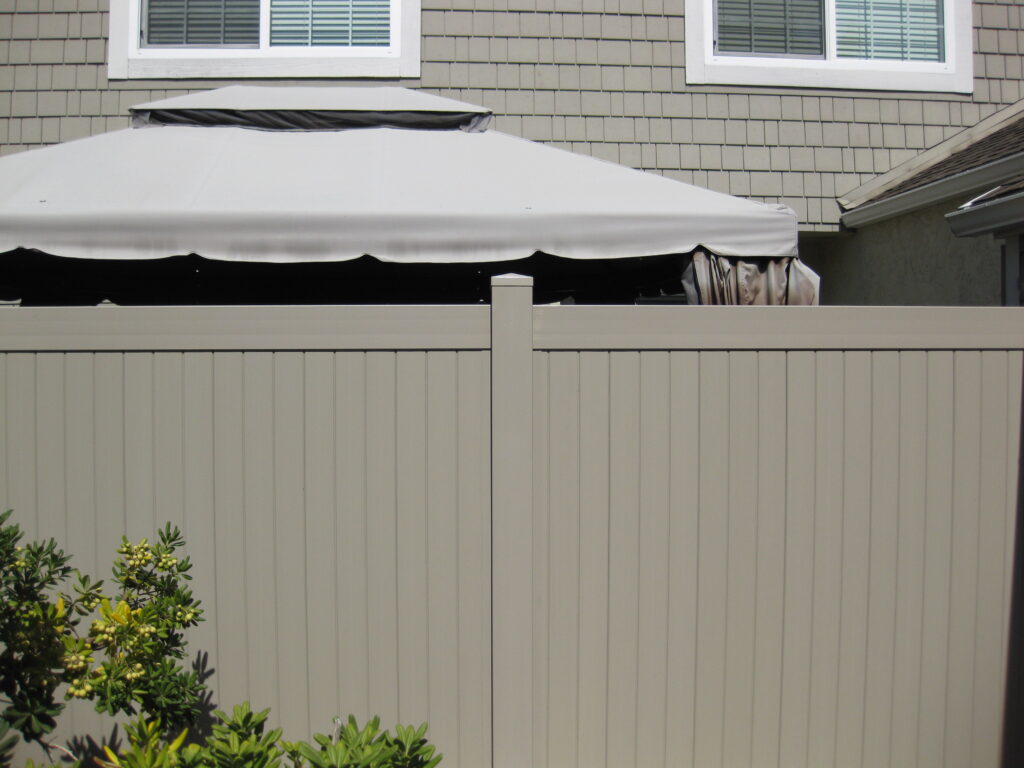
Fences with solid panels and no gaps provide the highest level of privacy. Wood and vinyl privacy fences are commonly used for this purpose because they can fully block visibility between properties.
What is the best privacy fence for a backyard?
The best privacy fence depends on the homeowner’s priorities. Wood and vinyl are the most common choices for full privacy, with wood offering customization and vinyl offering lower maintenance. The right option depends on layout, maintenance preferences, and desired appearance.
How tall should a privacy fence be?
Most privacy fences are built between 5 and 6 feet tall, which is typically sufficient to block sightlines from neighboring properties. In some cases, taller fences may be used where allowed by local guidelines or HOA rules.
Is vinyl or wood better for privacy?
Both vinyl and wood can provide full privacy when built with solid panels. The main differences are appearance and maintenance—wood typically requires more upkeep over time, while vinyl is designed to maintain its appearance with minimal maintenance.
Can a fence completely block visibility from neighbors?
A fence can significantly reduce visibility, especially when built with solid panels at an appropriate height. However, complete privacy may still depend on factors such as elevation, neighboring windows, and yard layout.
What fence requires the least maintenance for privacy?
Vinyl fencing is generally considered one of the lowest-maintenance privacy fence options. It does not require staining or sealing and typically only needs occasional cleaning.
Do privacy fences reduce noise?
Privacy fences can help reduce some noise, but they are not designed for full soundproofing. Solid fences may help dampen sound slightly, but noise reduction depends on material, height, and surrounding environment.
Are there alternatives to full privacy fencing?
Yes. Some homeowners combine fencing with other elements such as:
- Landscaping (hedges or trees)
- Pergolas or outdoor structures
- Privacy screens or panels
Who installs vinyl privacy fences in San Diego?
Alpine Fence Company installs vinyl privacy fences throughout San Diego County. As a locally owned and operated business with over 40 years of fencing experience, our in-house installation teams handle everything from site preparation and old fence removal to precision post-setting and final walkthrough. We offer a wide range of vinyl privacy fence styles including solid panel, lattice top, and woodgrain-look finishes in white, tan, clay, and more.
Choosing the Right Privacy Fence for Your Space
Privacy fencing options in San Diego vary based on material, design, and how the fence fits within the layout of a property. Factors such as height, panel design, and placement all influence how much visibility is reduced.
Alpine Fence works with a range of fencing materials and backyard layouts, helping homeowners understand how different options perform and what to expect over time.