Ornamental iron fencing is known for combining strength, visibility, and a timeless appearance. But before selecting it for a home or commercial property, many people have the same practical question: How long does ornamental iron fencing last?
A properly manufactured and professionally installed ornamental iron fence can remain functional for years. Its exact lifespan, however, depends on the quality of the materials, the protective finish, the installation, environmental exposure, and how consistently minor damage is addressed.
These factors are especially important in San Diego. Strong sunlight, irrigation, occasional moisture, and salt air near the coast can all affect how metal fencing ages over time. With the right materials and reasonable upkeep, ornamental iron can provide lasting security and curb appeal without requiring constant maintenance.
What Determines the Lifespan of an Ornamental Iron Fence?
There is no single lifespan that applies to every iron fence. Two fences made from similar materials can age differently depending on where and how they are installed.
The following factors have the greatest effect on longevity.
Material and Construction Quality
The quality of the metal and protective treatment matters from the beginning.
Alpine Fence Company’s ornamental iron fencing is made from high-quality, pre-galvanized steel with a protective powder-coated finish. Galvanization helps protect the underlying steel, while the exterior coating creates another barrier against moisture and everyday exposure.
Quality construction is also important at connection points, gates, hinges, posts, and welded areas. These parts experience more movement and wear than stationary fence panels and may require closer attention over time.
Professional Installation
Even a durable material can experience premature problems when installed incorrectly.
Fence posts must be positioned and secured properly, and the layout should account for the property’s shape, grade, drainage, and intended use. Gates must also be aligned correctly so they open and close without placing unnecessary stress on hinges or surrounding posts.
Professional installation gives the fence a stable foundation and reduces the likelihood of movement, sagging, or hardware problems later.
Protective Coatings
Metal fencing relies on its protective finish to separate the underlying material from moisture and oxygen.
A small scratch does not necessarily mean the fence is failing. However, chipped or damaged areas should be addressed before prolonged exposure allows corrosion to develop beneath the finish.
Ornamental iron fencing does not require intensive weekly upkeep, but it benefits from periodic inspections to catch these areas while they are still minor.
Environmental Exposure
Where the fence is installed can have a significant effect on how it ages.
A fence several miles inland may experience different conditions than one near the coast. Salt carried through coastal air can collect on metal surfaces, while regular sprinkler exposure can repeatedly leave certain sections wet.
Areas where plants, soil, or debris remain against the fence may also stay damp longer than open sections with good airflow.
How Does San Diego’s Climate Affect Ornamental Iron Fencing?
San Diego’s generally mild climate can be favorable for outdoor living, but local conditions still create several considerations for metal fencing.
Coastal Salt Air
Homes near the ocean may experience greater salt exposure than inland properties. Salt residue can settle on outdoor surfaces and accelerate corrosion when moisture is also present.
Periodically rinsing the fence with fresh water can help remove accumulated salt, especially on coastal properties.
Sprinkler Overspray
A section of fencing that gets wet every morning may age differently from the rest of the fence.
Sprinkler heads should be directed away from metal fencing whenever possible. This is particularly important when the water repeatedly hits the same connection points, posts, or lower rails.
Vegetation and Debris
Dense plants can hold moisture against the fence and make it difficult to see developing rust or coating damage.
Leaves, weeds, and other debris should be cleared from the base of the fence. Maintaining space around the metal also improves airflow and makes inspections easier.
Sun Exposure
Strong sunlight can gradually affect exterior finishes. A quality powder coating is intended to provide lasting protection, but the fence should still be inspected for fading, chalking, peeling, or other changes in the surface.
How Much Maintenance Does Ornamental Iron Fencing Require?
Ornamental iron is often considered a relatively low-maintenance fencing option, particularly when it is galvanized and properly coated.
A practical maintenance routine may include:
- Rinsing away salt, dirt, and landscaping residue
- Checking for scratches, chips, or early rust
- Keeping sprinklers directed away from the fence
- Removing vegetation and debris from the base
- Touching up exposed areas with an appropriate protective product
- Inspecting gate hinges, latches, and other moving parts
- Having structural or widespread corrosion evaluated professionally
Inspections do not need to be complicated. Walking the fence line periodically and checking the surface, posts, connections, and gates can identify most visible concerns.
Is Ornamental Iron Fencing Good for Security?
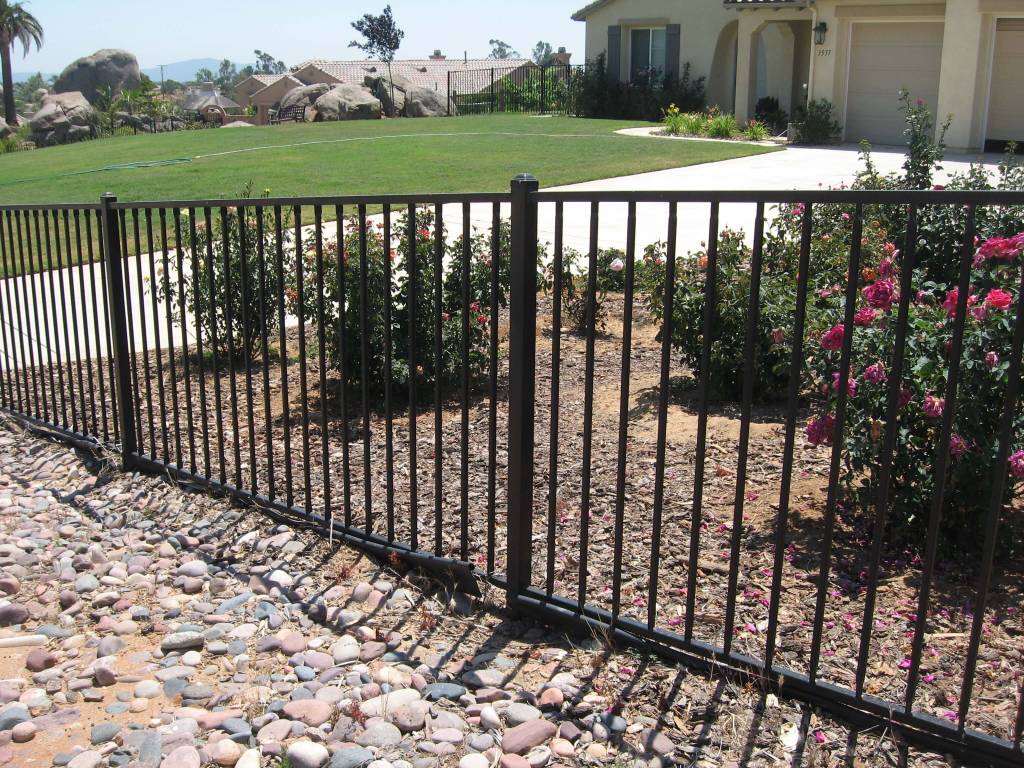
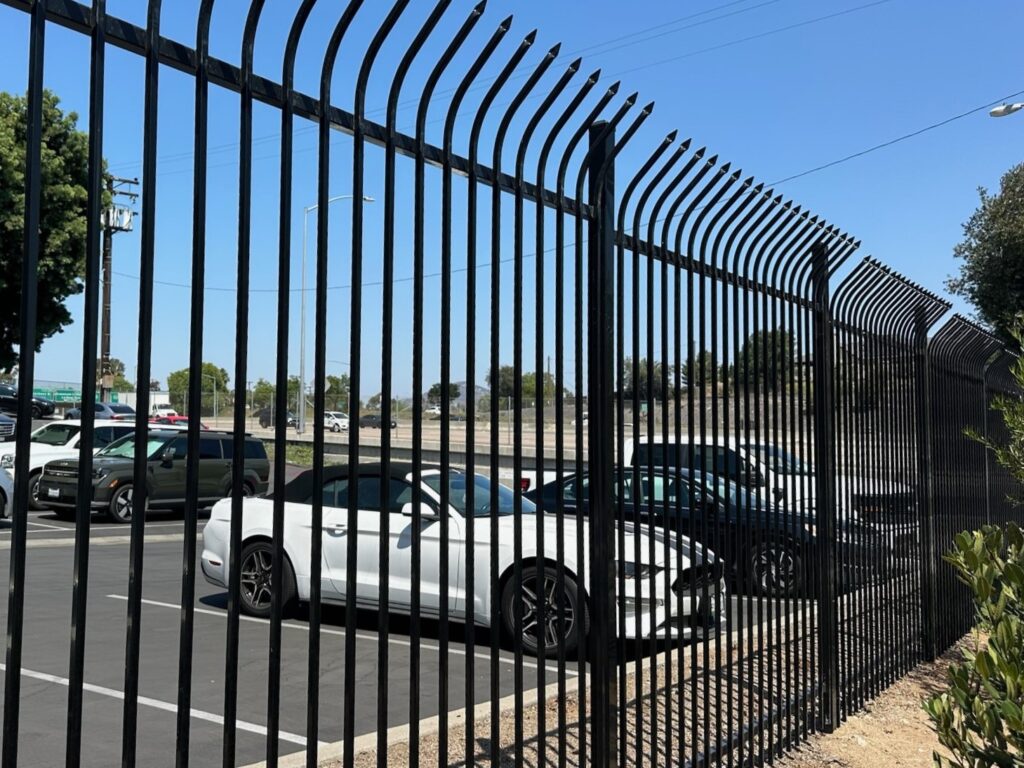
Ornamental iron fencing can provide a strong physical boundary while preserving visibility through the fence.
That visibility can be valuable around front yards, entrances, commercial properties, and other areas where owners want to define access without creating a solid visual barrier. Unlike a full privacy fence, an open design also allows people to see activity on the other side.
However, material alone does not determine how secure a fence will be. Security is also affected by:
- Overall fence height
- Picket spacing
- Top design
- Post strength and spacing
- Gate construction
- Locks and access hardware
- The surrounding property layout
Alpine’s ornamental iron fencing can be customized in different colors, styles, and heights, including heights over six feet where greater protection is needed. The appropriate design should be based on the property and the owner’s specific security goals.
Does Ornamental Iron Fencing Provide Privacy?
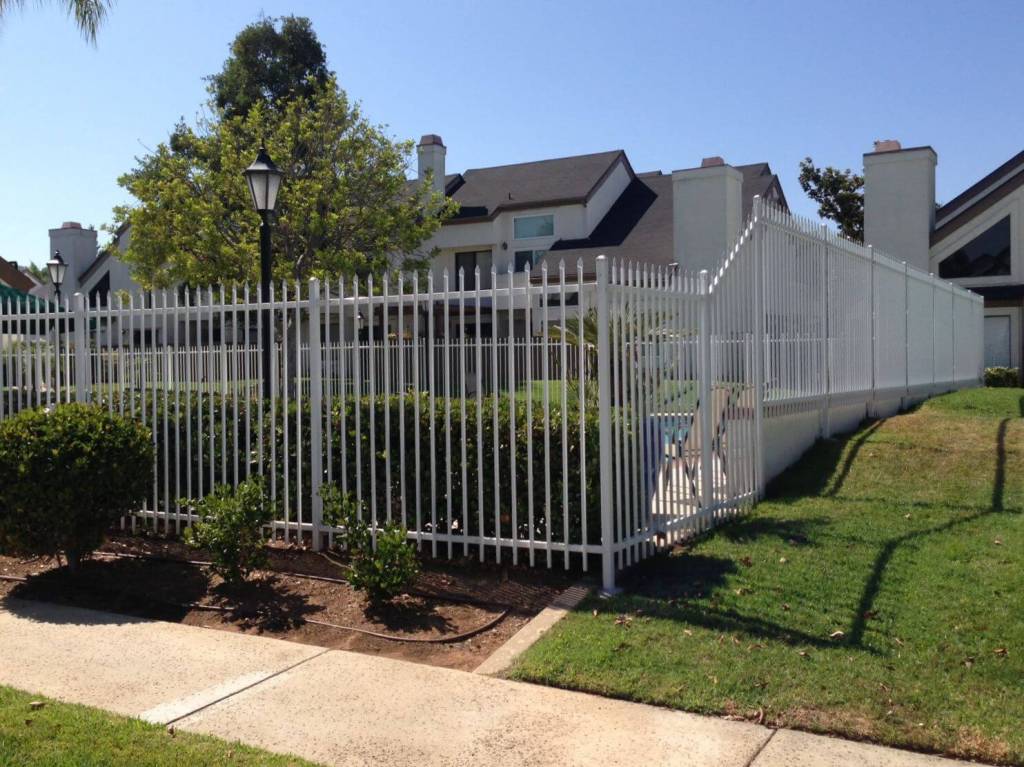
Traditional ornamental iron fencing provides limited visual privacy because of its open-picket design.
It is generally a better fit for homeowners who want to:
- Define a property boundary
- Improve security
- Preserve an open view
- Showcase landscaping
- Complement a home’s architecture
- Add a decorative gate or entrance
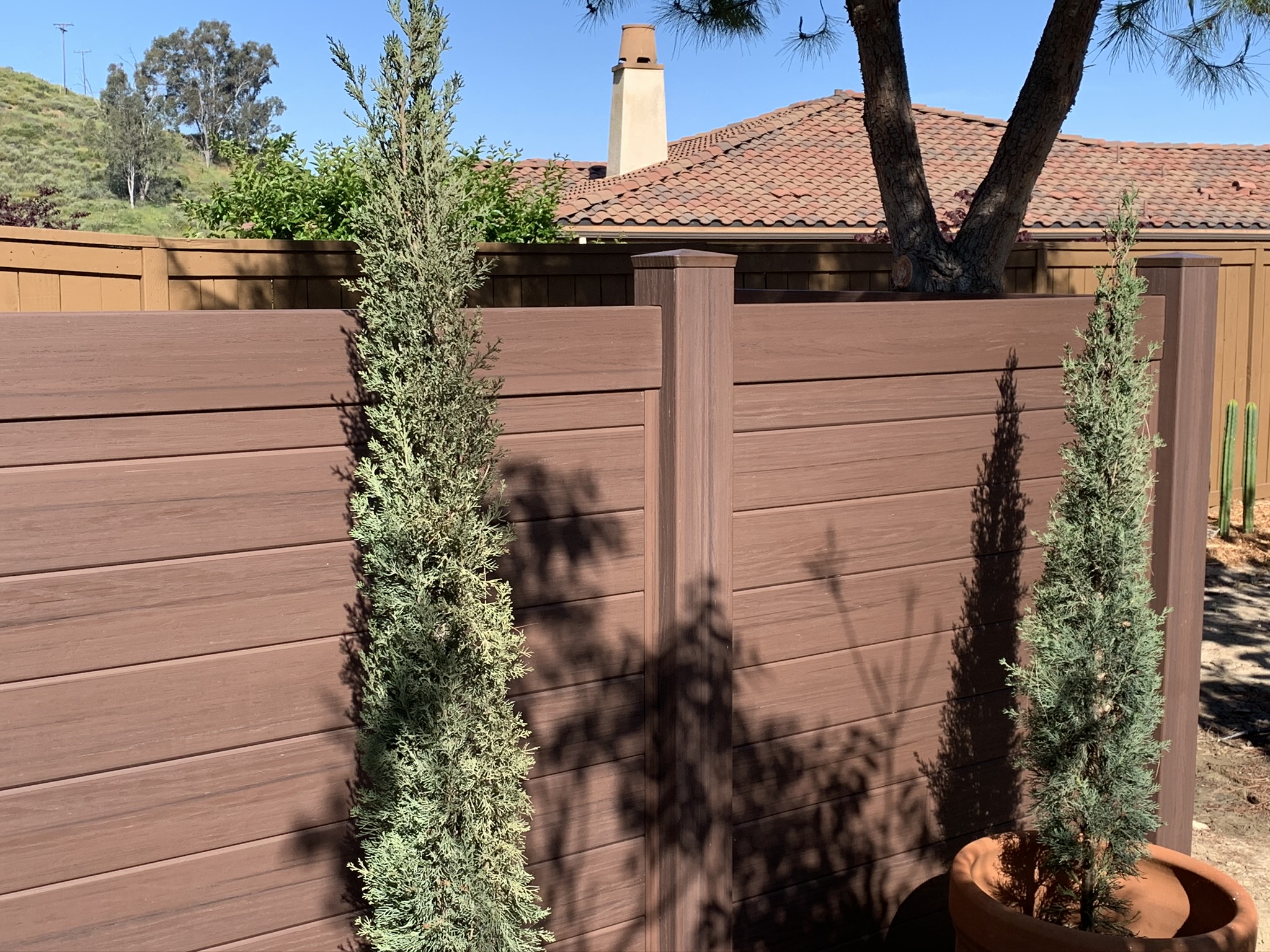
For people whose main priority is blocking visibility, a solid wood, vinyl, or metal privacy fence may be more suitable. Alpine’s existing privacy-fencing guidance similarly distinguishes open ornamental iron from solid materials intended for full visual screening.
In some cases, ornamental iron can be combined with landscaping or privacy features, but those additions may affect maintenance, visibility, airflow, and fire-safety considerations.
How Does Ornamental Iron Compare With Other Fencing Materials?
Every fencing material has different strengths. The best choice depends on whether the priority is longevity, privacy, security, appearance, maintenance, or budget.
Consideration | Ornamental Iron | Metal Privacy | Wood | Vinyl | Chain Link |
Visibility | Open | Solid or semi-private | Depends on style | Usually solid or semi-private | Open |
Privacy | Limited | High | Moderate to high | Moderate to high | Limited without slats |
Appearance | Decorative and architectural | Modern and streamlined | Natural and traditional | Clean and uniform | Practical and functional |
Maintenance | Cleaning and coating inspections | Periodic cleaning and finish inspections | Sealing, staining, and repairs | Periodic cleaning | Periodic cleaning and inspections |
Security | Strong when properly designed | Strong, with added visual screening | Depends on construction | Depends on construction | Practical perimeter security |
Customization | Colors, heights, decorative details, and gates | Panel styles, colors, heights, and gates | Styles, stains, toppers, and gates | Colors, styles, and gates | Colors, coatings, slats, and gates |
Ornamental iron is often a strong fit when a property owner wants a durable boundary with an elevated appearance and does not need complete privacy.
Is Ornamental Iron Fencing a Good Choice for Zone Zero?
Ornamental iron and other metal fencing options are noncombustible, making them relevant to homeowners considering fencing near structures and within defensible-space areas.
Alpine identifies ornamental iron, chain link, and metal privacy fencing as metal options that may align with Zone Zero principles. Property owners should still evaluate the complete installation, including attached materials, nearby vegetation, accumulated debris, and applicable local requirements.
Because wildfire regulations and local enforcement can change, homeowners should confirm current requirements for their property before beginning a project.
When Is Ornamental Iron Fencing a Good Choice?
Ornamental iron may be a good option for:
- Front yards where an open appearance is preferred
- Decorative property boundaries
- Gated driveways and entrances
- Residential or commercial security
- Properties with views worth preserving
- Homes with traditional, Mediterranean, Spanish, or modern architecture
- Areas where a noncombustible fencing material is desired
- Custom gates, handrails, or decorative features
It may be less suitable when the primary objective is complete visual privacy or when the owner does not want to perform any coating inspections or metal maintenance.
Frequently Asked Questions About Ornamental Iron Fencing
How long does ornamental iron fencing last?
A well-constructed ornamental iron fence can remain functional for decades. Its exact lifespan depends on material quality, protective coatings, installation, environmental exposure, and maintenance. Addressing scratched finishes, moisture exposure, and early rust can help extend the fence’s useful life.
Does ornamental iron fencing rust?
Ornamental iron fencing can rust if moisture reaches exposed metal. Pre-galvanized steel and protective powder coatings help reduce that risk. Rust is most likely to begin where the coating has been scratched, chipped, or worn away.
How can you keep an ornamental iron fence from rusting?
Keep the fence clean, limit sprinkler overspray, remove vegetation and debris, and inspect the finish for damage. Scratches or chipped areas should be treated promptly with a suitable protective coating before corrosion has an opportunity to spread.
How often should an ornamental iron fence be inspected?
A general inspection at least once or twice a year is a reasonable starting point. Coastal properties or fences exposed to frequent irrigation may need more frequent checks. It is also helpful to inspect the fence after construction, landscaping work, or anything that may have damaged its finish.
Is ornamental iron fencing difficult to maintain?
It generally requires periodic rather than constant maintenance. Most routine care involves cleaning the surface, checking for coating damage or rust, clearing debris, and making sure gates and hardware continue to function properly.
Is ornamental iron fencing suitable for coastal areas?
It can be used in coastal areas, but salt exposure should be considered. Galvanized materials and protective coatings are particularly important near the ocean. Periodic rinsing with fresh water can also help remove salt residue from the surface.
Can sprinklers damage an ornamental iron fence?
Repeated sprinkler exposure can keep portions of the fence wet and may contribute to corrosion over time, particularly where the protective finish is damaged. Sprinkler heads should be adjusted so they do not regularly spray the fence.
Is ornamental iron fencing secure?
Yes, ornamental iron can create a strong and visible property boundary. Its security depends on the fence height, picket spacing, post construction, gate design, locks, and overall layout. A professional can help determine which design features are appropriate for the property.
Does ornamental iron fencing provide privacy?
Traditional ornamental iron fencing provides minimal privacy because it has an open design. It is generally chosen for security, visibility, boundary definition, and appearance. Homeowners seeking full visual screening may prefer solid wood, vinyl, or metal privacy fencing.
Can ornamental iron fencing include a matching gate?
Yes. Gates can be designed to coordinate with the fence’s color, height, picket style, and decorative details. The gate hardware and supporting posts should be selected for the gate’s size, weight, and frequency of use.
What is the difference between ornamental iron and traditional wrought iron?
Traditional wrought iron refers to iron that is shaped and worked by hand. Many products commonly called ornamental iron today are made from manufactured steel components. Alpine Fence uses pre-galvanized steel with a protective powder-coated finish for its ornamental fencing.
Can an ornamental iron fence be repaired?
Many localized problems can be repaired, including damaged coatings, minor rust, hardware issues, and certain bent or damaged sections. The appropriate repair depends on whether the concern is cosmetic or structural. Extensive corrosion or unstable posts should be evaluated by a fencing professional.
Is ornamental iron fencing a good option for front yards?
It can be an excellent front-yard option because it defines the property and adds security without completely blocking the home or landscaping from view. Its decorative appearance can also complement a wide range of architectural styles.
Is ornamental iron fencing appropriate for homes and businesses?
Yes. Ornamental iron can be customized for residential and commercial properties. Homes may prioritize decorative details and curb appeal, while businesses may focus more heavily on height, gates, controlled access, and security.
Choosing an Ornamental Iron Fence for Your San Diego Property
The lifespan of an ornamental iron fence depends on more than the material itself. Quality construction, professional installation, protective finishes, environmental exposure, and routine care all play a role in how the fence performs over time.
For San Diego properties, it is particularly important to consider coastal salt air, irrigation, landscaping, gate use, and the condition of the protective coating.
Alpine Fence Company has served San Diego County since 1983 and installs customizable ornamental iron fencing for residential and commercial properties. Its team can help evaluate your property, compare fencing options, and design an installation that balances longevity, security, and style.
Contact Alpine Fence Company to schedule a free on-site estimate.