A sloped or uneven yard doesn’t mean you have to compromise on your fencing options. With the right material and installation method, a fence can follow changing elevations while still providing the privacy, security, and appearance you want.
For San Diego homeowners, this can be especially important on hillside properties, canyon-adjacent lots, and yards where the grade changes from one side of the property to another. The best solution depends on several factors, including the steepness of the slope, the type of fence, how much privacy you need, and the overall layout of the property.
Understanding how different fences work on uneven ground can make it easier to choose an option that fits both your yard and your goals.
Why Is Fencing a Sloped Yard Different?
Most standard fence installations are simplest on relatively level ground. On a slope, however, the elevation changes along the fence line.
That can affect:
- How fence panels are positioned
- The amount of space beneath the fence
- Post placement and spacing
- Fence height and appearance
- Privacy between neighboring properties
- Gate placement and operation
- Drainage and erosion around fence posts
A professional fence installer can evaluate the grade of the property and determine whether the fence should follow the slope or be installed following grade.
Following Grade vs. Racked Fencing: What’s the Difference?
Two common approaches for installing fencing on a sloped or uneven yard are following the grade and racked fencing.
What Does It Mean to Follow the Grade?
Following the grade means installing the fence so that it moves with the natural rise and fall of the ground. Rather than forcing the fence line to remain level, the installation is adjusted to accommodate the existing terrain.
Following the grade can be a good option when:
- The property has changing or uneven elevations
- Maintaining a consistent relationship between the fence and the ground is important
- Minimizing large gaps beneath the fence is a priority
- The fence design allows for adjustments along the terrain
This approach can be especially helpful for properties where the slope varies throughout the fence line rather than following one consistent angle.
What Is Racked Fencing?
Racked, sometimes called raked, fencing is designed so that the fence panels themselves angle to follow the slope of the ground.
Instead of remaining level, the top and bottom of the fence gradually rise or fall with the terrain, creating a continuous appearance.
Racked fencing can be a good option for:
- Gradual slopes
- Long, consistent changes in elevation
- Reducing gaps beneath the fence
- Creating a continuous appearance along the landscape
Not every fence style or panel system can accommodate the same degree of racking, so the material and severity of the slope matters.
What Are the Best Fence Materials for Sloped Yards?
Several popular fencing materials can work on sloped or uneven properties. The right choice depends on the terrain as well as what you want the fence to accomplish.
Chain Link Fencing
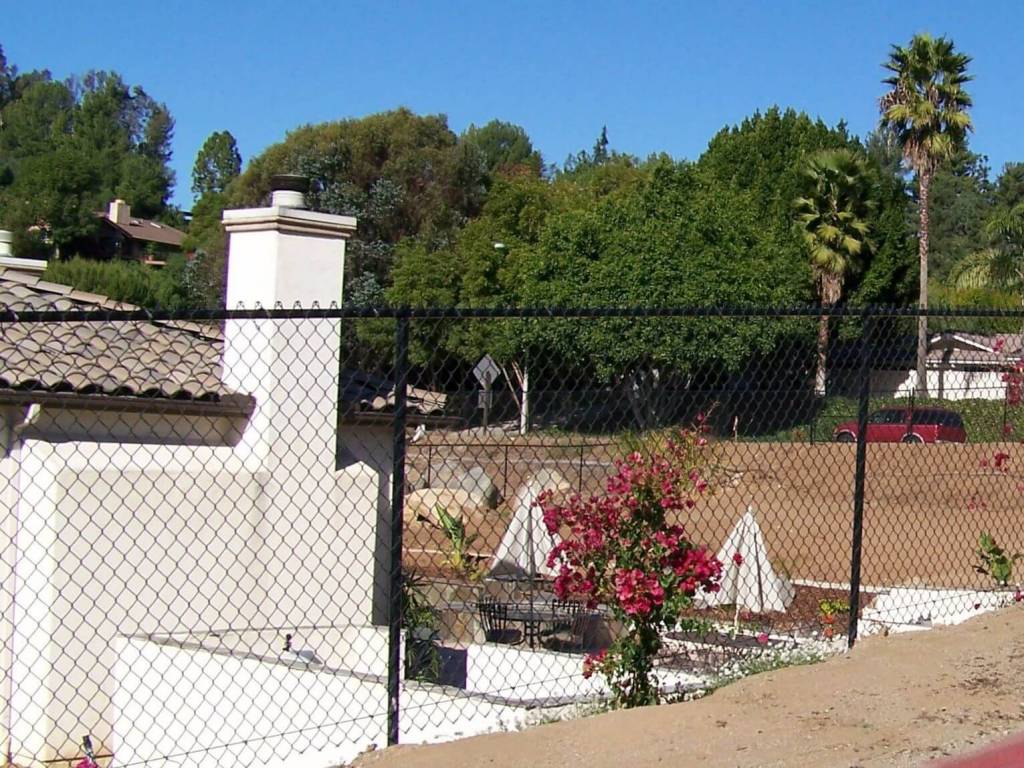
Chain link is one of the most adaptable fencing options for uneven terrain.
Because the fencing material is flexible, it can often follow changes in elevation more easily than rigid fence panels. This can make chain link particularly useful for larger yards, irregular property lines, hillsides, and areas where enclosure is more important than complete privacy.
Chain link fencing may be a good choice when you want:
- A fence that follows uneven terrain
- Security or property enclosure
- Fewer large gaps beneath the fence
- A practical solution for larger areas
- Visibility through the fence
The final installation method will depend on how dramatically the ground changes along the fence line.
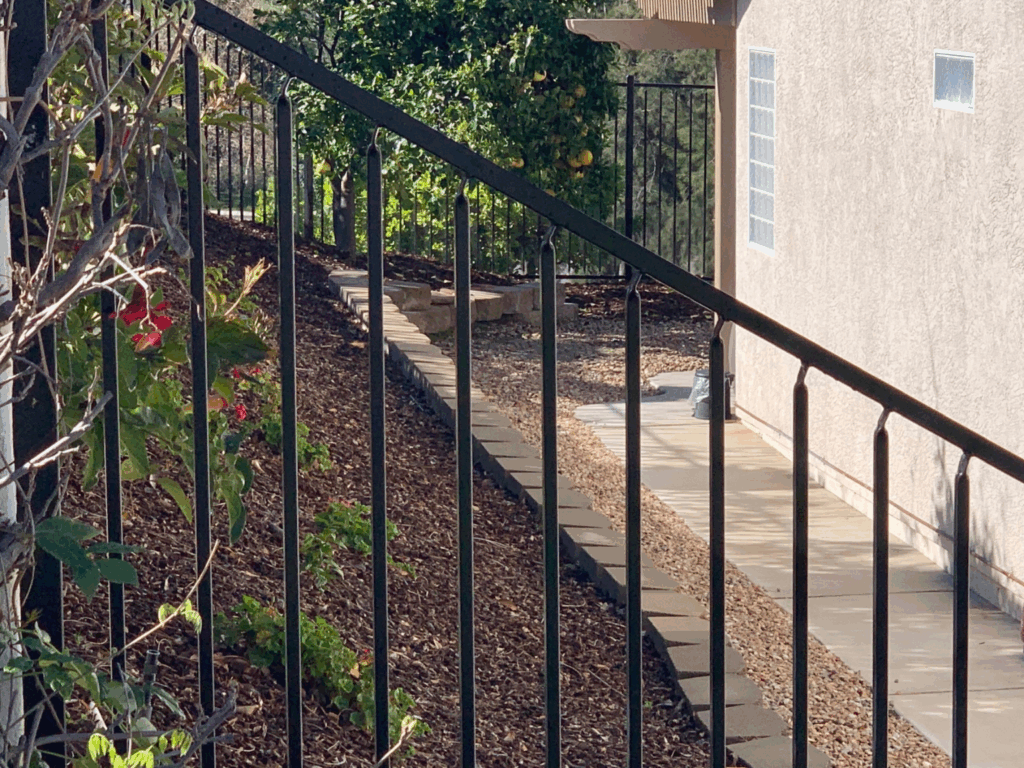
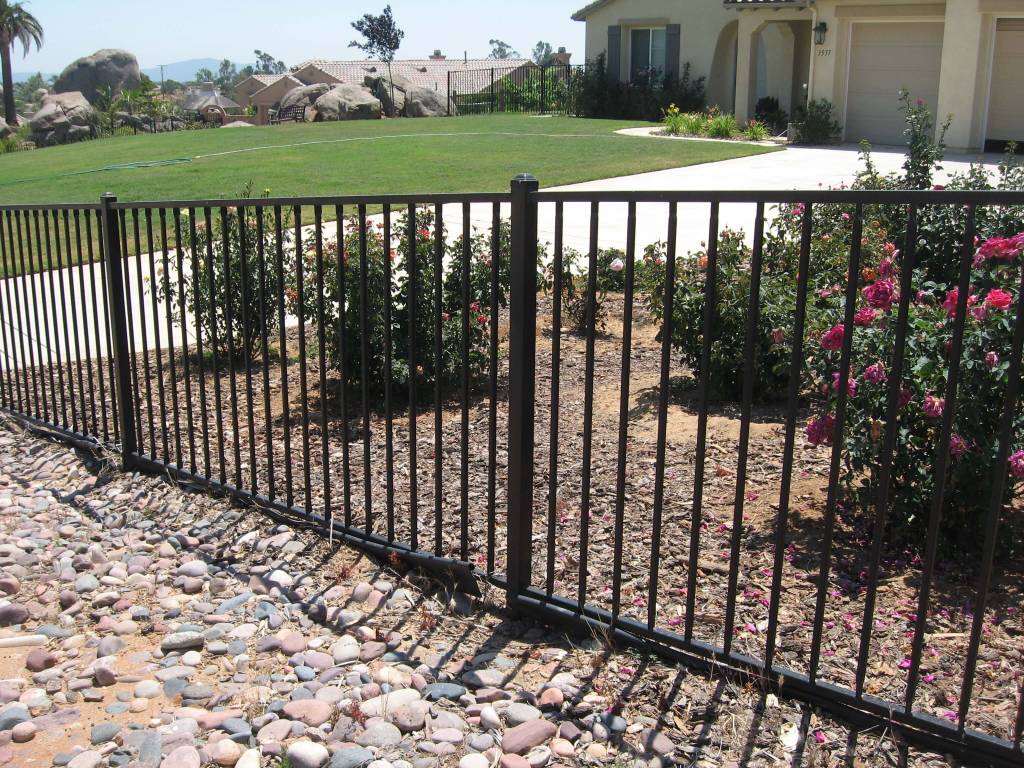
Ornamental Iron Fencing
Ornamental iron fencing can work especially well on properties where homeowners want security without completely blocking the surrounding view.
That can make it an attractive option for San Diego hillside properties, elevated yards, and homes overlooking open space.
Depending on the fence design and grade of the property, ornamental iron sections may be racked or otherwise customized to accommodate changes in elevation.
Benefits can include:
- An open appearance
- Strong property definition
- Security without a solid visual barrier
- Compatibility with many architectural styles
- Options for sloped or changing terrain
For properties with significant elevation changes, the specific fence design should be selected with the slope in mind.
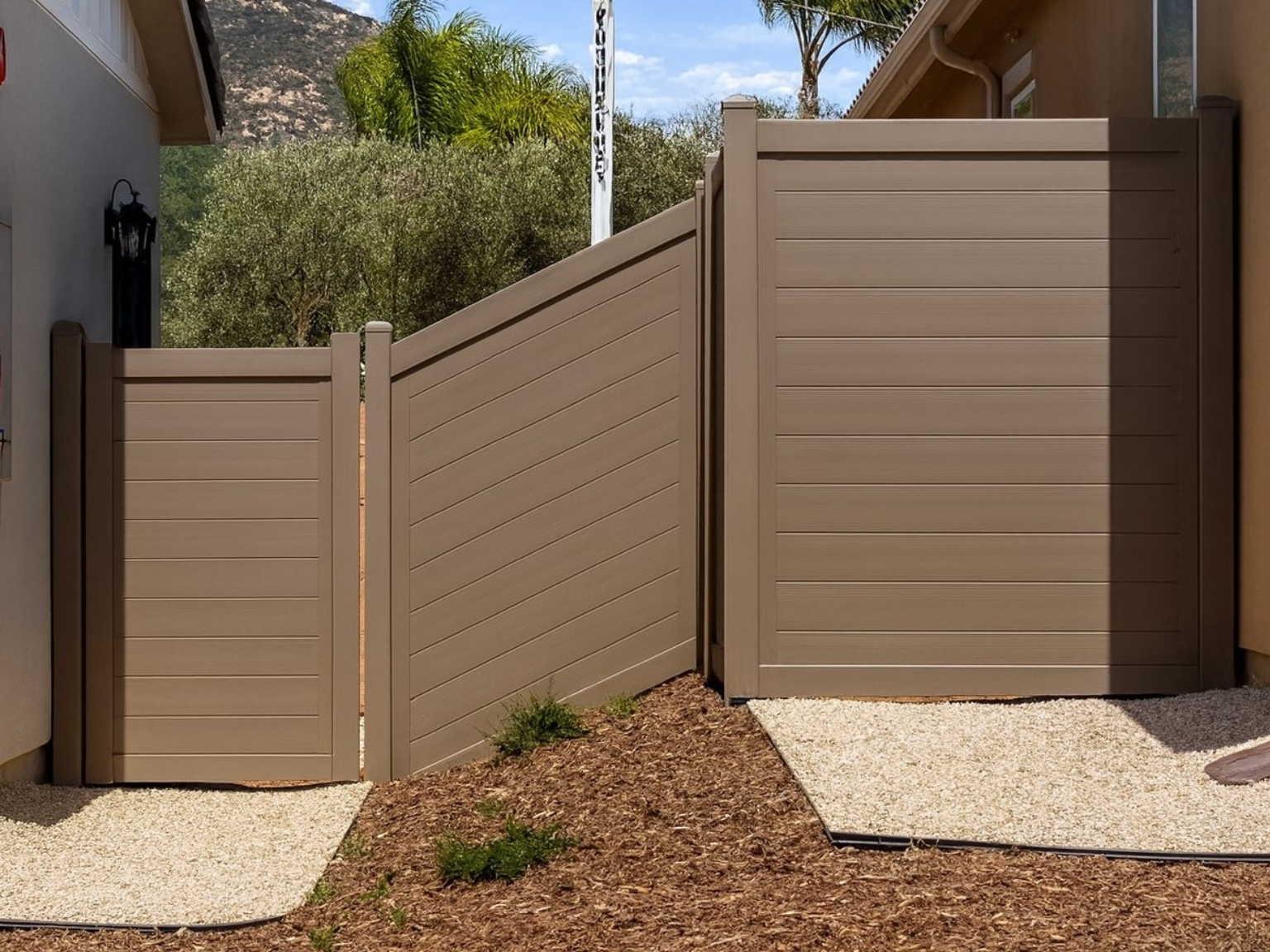
Vinyl Fencing
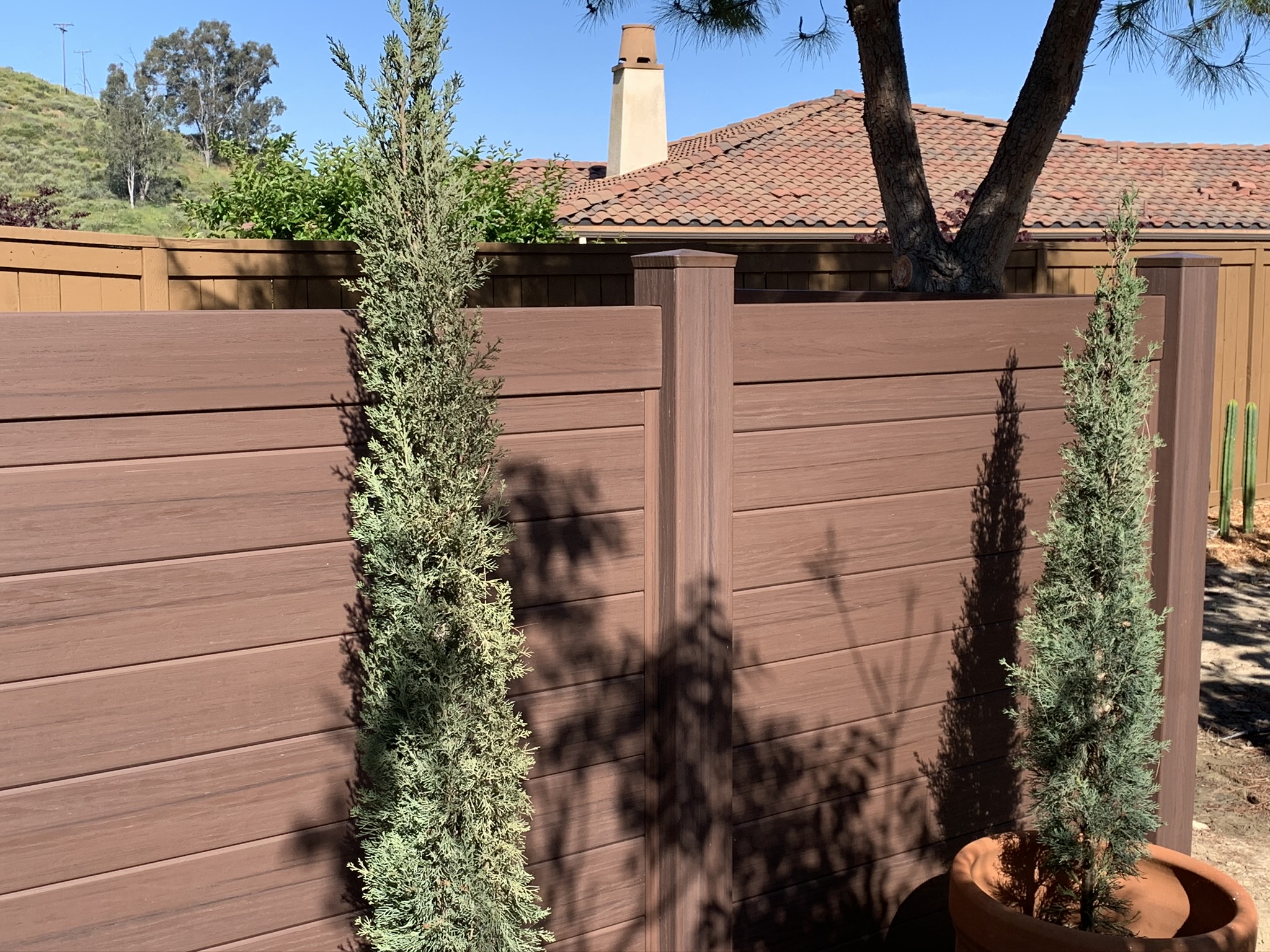
Vinyl fencing can provide both privacy and a clean, uniform appearance, but installation on a slope requires careful planning.
Depending on the panel system and the grade of the yard, vinyl fencing may be installed following grade or using a racked approach.
Vinyl may be worth considering when:
- Privacy is a priority
- The yard has a gradual or manageable slope
- A low-maintenance fencing material is preferred
- The homeowner wants a more solid barrier
Because vinyl panels vary in how much they can accommodate changes in grade, the property should be evaluated before deciding on a specific style.
Wood Fencing
Wood is another versatile choice for uneven yards because it offers significant flexibility in how individual boards and sections can be installed.
Depending on the design, wood fencing can be:
- Following grade down a hillside
- Adjusted to follow changes in grade
- Customized around irregular areas
- Built for partial or full privacy
Wood may be particularly useful for properties where a standard prefabricated panel does not fit the terrain well.
As with any wood fence, homeowners should also consider ongoing maintenance and how the material will be exposed to moisture, irrigation, and changing ground conditions.
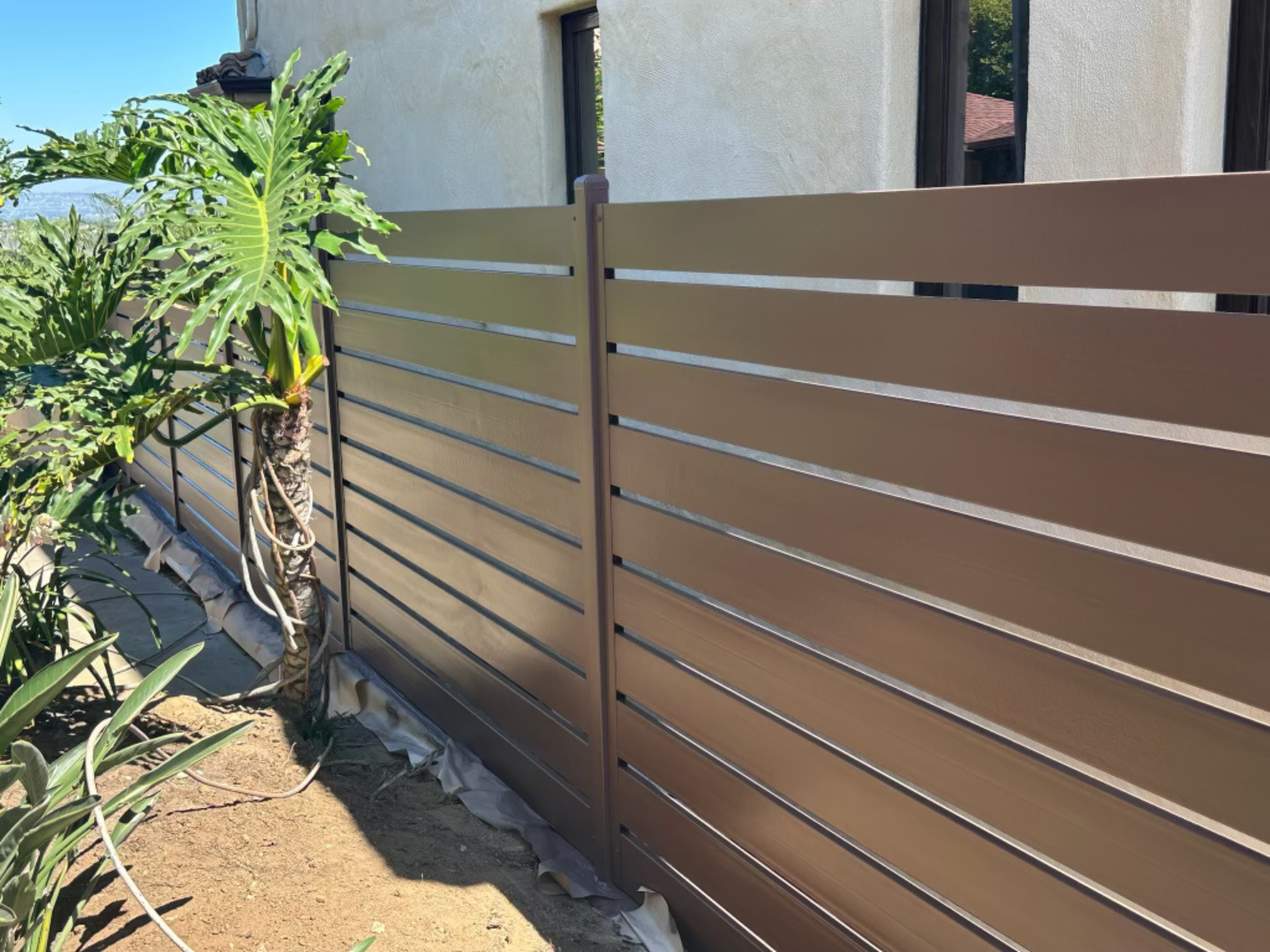
Metal Privacy Fencing
Metal privacy fencing may also be an option for some sloped properties.
Because privacy fencing uses solid or mostly solid panels, changes in elevation have to be accounted for carefully to avoid excessive gaps and maintain a consistent appearance.
Depending on the panel system and severity of the slope, a metal privacy fence may follow grade or use another customized layout.
This type of fencing can be worth discussing if you want the durability and appearance of metal along with greater privacy than an open ornamental fence provides.
What Is the Best Fence for a Slightly Uneven Yard?
A slightly uneven yard usually provides more flexibility than a steep hillside.
Chain link, ornamental iron, wood, vinyl, and certain metal fencing systems may all be possibilities.
For minor elevation changes, installers may be able to adjust individual fence sections or follow the contour of the yard without creating dramatic steps.
The best option will depend less on the slope itself and more on what you want from the fence, such as privacy, security, pet containment, appearance, or lower maintenance.
What Is the Best Fence for a Steep Hillside?
For steeper properties, adaptability becomes especially important.
Chain link can be useful because of its ability to follow changing terrain, while custom wood or ornamental metal fencing may provide additional design flexibility depending on the property.
Rigid privacy panels may still be possible, but they often require more planning and customization on significant slopes.
Rather than choosing a material based only on appearance, homeowners with steep yards should consider how that particular fence system will transition across the grade.
How Do You Prevent Gaps Under a Fence on a Slope?
Gaps can form when level fence panels are installed over changing elevations.
Reducing those gaps may involve:
- Using a racked installation that follows the ground
- Adjusting fence sections to better match the grade
- Selecting a more adaptable fencing material
- Customizing individual sections
- Planning post locations around major elevation changes
Keeping gaps to a minimum can be especially important for households with pets or young children and for homeowners who want greater privacy.
Completely eliminating every gap may not always be practical on highly irregular terrain, which is why evaluating the property before choosing the fence style is important.
What About Fencing Near a Retaining Wall?
Retaining walls add another consideration to fencing a sloped yard.
The placement of the fence, condition of the wall, elevation difference, and method used to secure the fence all need to be considered before installation.
A fence should not automatically be installed on or immediately next to an existing retaining wall without evaluating the specific conditions of the property.
Homeowners may also need to consider local requirements, property boundaries, HOA guidelines, and other rules that apply to their project.
How Does Drainage Affect Fencing on a Slope?
Water naturally moves downhill, which makes drainage particularly important on sloped properties.
Fence installation should take existing drainage patterns into account so that water is not unintentionally trapped or redirected in a way that creates problems around the fence.
Potential considerations include:
- Soil erosion
- Water collecting around posts
- Irrigation runoff
- Drainage channels
- Changes to the surrounding grade
These conditions can vary substantially from one San Diego property to another.
Choosing a Fence for Your San Diego Property
Sloped and uneven yards can present additional fencing challenges, but they also leave homeowners with plenty of options.
Chain link can adapt well to changing terrain, ornamental iron can preserve views on elevated properties, wood provides extensive customization, and vinyl or metal privacy fencing may be possible with the appropriate installation method.
The key is choosing the fence and installation approach together.
Alpine Fence Company can evaluate your property, discuss your privacy and security goals, and help determine which fencing options are best suited to the slope and layout of your yard.
Frequently Asked Questions About Fencing Sloped Yards
What is the best type of fence for a sloped yard?
There is no single best material for every sloped yard. Chain link, ornamental iron, wood, vinyl, and other fencing systems can all work depending on the severity of the slope, desired privacy, and installation method.
Can you install a fence on uneven ground?
Yes. Fences can be installed on uneven terrain using methods such as grade or racked installation, along with customized adjustments when necessary.
What is the difference between following grade and racked fencing?
Following grade means installing the fence so that it moves with the natural rise and fall of the ground. Racked fencing also follows the slope, but the fence panels themselves are angled to match the grade, creating a smooth, continuous appearance.
Is following grade or racked fencing better for a slope?
It depends on the property and fence type. Following grade can work well on yards with changing or uneven elevations, while racked fencing is often a good fit for gradual, consistent slopes where the panel system can adjust to the angle of the ground.
What type of fence works best on a steep hillside?
The best option depends on the grade and purpose of the fence. Chain link and customized wood or ornamental metal fencing can be especially adaptable, while rigid panels may require following grade for installation.
How do you prevent gaps underneath a fence on a slope?
Using a fence system that can follow the contour of the ground is one way to reduce gaps. Fence sections can also be customized or adjusted based on the grade.
Can you install a privacy fence on sloped ground?
Yes. Privacy fencing can often be installed on a slope, although the installation method may need to be customized to maintain coverage and minimize gaps.
Can a fence be installed on top of a retaining wall?
It may be possible, but the condition and construction of the retaining wall should be evaluated first. Structural, property, and local requirements may also affect the installation.
Do you need to level the ground before installing a fence?
Not necessarily. Many fences can be installed without completely leveling the property. Grade and racked installation methods are specifically designed to accommodate changes in elevation.
How do you install a gate on a sloped yard?
Gate placement requires careful planning because gates typically need enough clearance to open and close properly. In some cases, placing the gate on a more level portion of the fence line may be preferable.